What Freezes Well and What Doesn't
Freezing can preserve almost any food safely, but it can change texture and flavor. According to Penn State Extension, you can freeze nearly any food at 0°F, and it will stay safe indefinitely, though quality may deteriorate over time. For best quality, plan to eat frozen meals within about three months.
Some foods freeze better than others. Soups, stews, and casseroles generally freeze well, but dishes with cream, noodles, or mayonnaise may not hold their texture perfectly. High-water vegetables like lettuce and cucumbers become limp and watery when frozen, while eggs in their shells and mayonnaise-based dishes are best kept out of the freezer. Leafy greens such as spinach can still be frozen and used in cooked dishes like soups or smoothies.
- Freezes well: cooked meats, soups, stews, casseroles, cooked beans, grains like rice and quinoa, and most cooked vegetables.
- Freezes poorly: raw eggs in the shell, mayonnaise-based salads, lettuce, cucumbers, and other high-water raw vegetables, and dishes with heavy cream that may separate and turn gritty.
- Soft cheeses like cottage cheese, ricotta, brie, and camembert do not freeze well because of their high moisture, but hard cheeses freeze acceptably, though they can become crumbly.
- If you freeze cooked pasta, undercook it by a few minutes to help it stay firmer when reheated.
Sources: Penn State Extension, Souper Cubes, A Dash of Macros
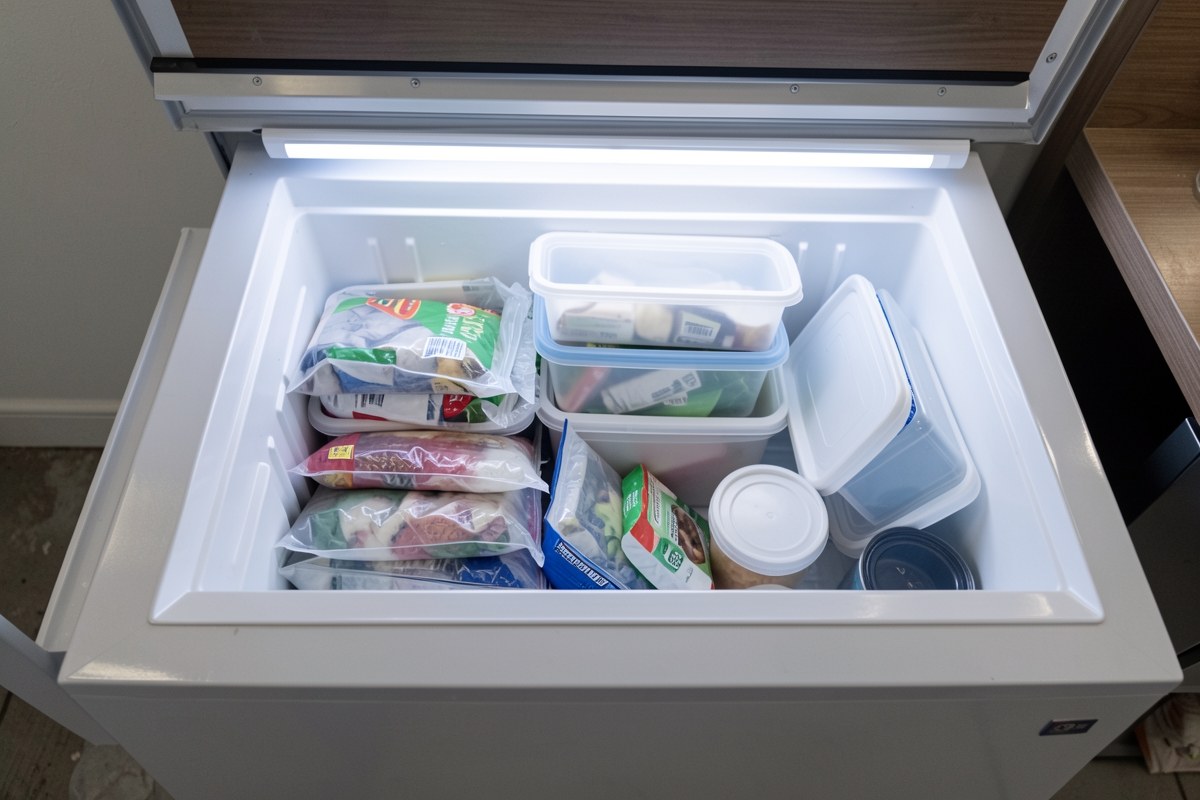
Choosing Freezer-Safe Containers
The right container can protect your food from freezer burn and make reheating easier. You can use rigid containers made of plastic or glass, as long as they are labeled freezer-safe. Wide-mouth jars and other thick glass containers are suitable for freezing meals because they are designed to handle temperature changes. Avoid thin glass that may crack.
For flexible storage, heavy-duty zip-top bags work well for soups, sauces, and marinated meats. Press out as much air as possible before sealing. For casseroles and portioned meals, shallow containers allow for faster and more even thawing in the refrigerator.
- Choose containers that are clearly marked freezer-safe, whether plastic or glass.
- Use wide-mouth, freezer-safe glass containers for soups and stews, leaving headroom for expansion.
- Heavy-duty zip-top bags are convenient for flat storage and help remove air easily.
- For casseroles, freeze in shallow containers to speed thawing and reheating.
- Always leave some space at the top of rigid containers because food expands as it freezes.
Sources: Penn State Extension, Souper Cubes, Dietetic Directions
Step-by-Step: Freeze, Thaw, and Reheat
Knowing how to freeze and reheat meals properly keeps them safe and tasting good. Always cool hot food quickly before freezing, but do not leave it at room temperature for more than two hours. Divide meals into individual or family-sized portions so they freeze and thaw faster.
When you are ready to eat, the safest way to thaw is in the refrigerator overnight. You can also reheat some dishes directly from frozen, but this will take longer. For casseroles, use a clean food thermometer to check that the center reaches 165°F.
- Cool freshly cooked food quickly, then package it in freezer-safe containers or bags.
- Remove as much air as possible from containers or bags to reduce the risk of freezer burn.
- Label each package with the name of the dish and the date before placing it in the freezer.
- Freeze meals in a single layer if possible, so they freeze quickly and evenly.
- Thaw frozen meals in the refrigerator overnight. Do not thaw at room temperature.
- Reheat thawed or frozen casseroles until the center reaches 165°F.
- Use frozen meals within three months for the best quality.
Sources: Penn State Extension, A Dash of Macros
Labeling and Rotation
When you have a full freezer, it is easy to forget what you stored and how long ago you made it. Labeling every package with the name and date solves that problem and helps you rotate older meals to the front. Use a permanent marker on freezer tape, or write directly on plastic bags and containers.
A simple system is to place newly frozen meals behind older ones, so you use the oldest first. This practice, known as first in, first out, reduces waste and ensures you enjoy meals at their best quality.
- Write the dish name and freeze date on every container or bag.
- Use freezer tape or a permanent marker that withstands cold and moisture.
- In your freezer, place newer meals behind older ones so you pull the oldest out first.
- Keep a short list on the freezer door or in your phone to track what you have.
Sources: Penn State Extension, A Dash of Macros, Dietetic Directions
Freezer Meal Prep Recipes to Try
To get you started, here are a few meal ideas that are well suited to freezing. These are general suggestions, not full recipes, but they show how to apply the principles in this guide.
Soups and stews are excellent candidates because they freeze and reheat well. Make a big batch of vegetable soup, lentil stew, or chili, then portion it into individual containers. For creamy soups, add the cream after reheating if possible to avoid a gritty texture.
Casseroles such as lasagna, enchiladas, or shepherd's pie freeze beautifully. Assemble the casserole but do not bake it; wrap tightly and freeze. When ready to eat, thaw overnight in the refrigerator and bake according to the original recipe. If baking from frozen, add extra time and check that the center of a casserole containing meat or poultry reaches 165°F.
For breakfast sandwiches, assemble English muffins with eggs and cheese, wrap individually, and freeze. To keep the bread from getting soggy, place condiments in the middle and let cheese act as a barrier. Reheat directly from frozen in the microwave or oven.
- Vegetable and lentil soups: freeze in portions, add fresh herbs or cream after reheating if desired.
- Bean and beef chili: freeze in single-serving containers, top with cheese or avocado after reheating.
- Lasagna or baked ziti: assemble without baking, freeze, then bake from frozen or after thawing.
- Breakfast burritos or sandwiches: wrap individually, label, and reheat in the microwave or toaster oven.
- Cooked grains like rice or quinoa: freeze in flat bags and add to bowls or stir-fries.
Sources: Penn State Extension, Pinch of Yum, She's In Her Apron
Common Freezer Mistakes and How to Avoid Them
Even experienced cooks can make mistakes when freezing meals. The most common problem is freezer burn, which appears as dry, grayish patches and happens when air reaches the food. To prevent it, remove as much air as possible from packaging and always use freezer-safe containers.
Another mistake is freezing foods that do not freeze well, like raw lettuce or mayonnaise-based salads. While these foods are safe after thawing, their texture becomes unappealing. Instead, freeze cooked dishes that have stable ingredients.
If you thaw food in the refrigerator, you can safely refreeze it, but quality may suffer. For the best texture and flavor, avoid refreezing foods that have been completely thawed.
- Avoid skipping labels: label everything with the name and date immediately.
- Avoid freezing hot food directly: cool it first to keep the freezer temperature stable.
- Avoid overpacking the freezer: leave space for air circulation so food freezes quickly.
- Avoid using the wrong container: always choose freezer-safe materials and leave headroom.
- Avoid thawing at room temperature: thaw in the refrigerator to keep food safe.
- Avoid undercooking casseroles: use a food thermometer to ensure the center of casseroles with meat or poultry reaches 165°F.
Sources: Penn State Extension, A Dash of Macros
Frequently asked questions
How long can frozen meal prep last?
Frozen food stays safe indefinitely at 0°F, but quality declines over time. For best quality, use frozen meals within three months, according to Penn State Extension.
Sources: Penn State ExtensionCan I freeze meals in glass containers?
Yes, freezer-safe glass containers work well because they are thick enough to withstand temperature changes. Always leave some headroom for expansion, and avoid thin glass that may crack.
Sources: Penn State Extension, Souper Cubes, Dietetic DirectionsDo I need to thaw before reheating?
Not always. Some dishes, like casseroles, can be cooked from frozen with additional time. However, thawing in the refrigerator overnight is recommended for even reheating and better texture. Always reheat until the food reaches 165°F for casseroles containing meat or poultry.
Sources: Penn State ExtensionHow can I prevent freezer burn?
Remove as much air as possible from containers or zip-top bags before sealing. Use airtight, freezer-safe packaging and press out excess air. This keeps moisture in and prevents the dry spots that characterize freezer burn.
Sources: Penn State Extension, A Dash of MacrosSources
- Make-Ahead Freezer Meals to the Rescue — Penn State Extension
- How to Freeze Meal Prep: The Ultimate Guide — Souper Cubes
- The Complete Guide to Freezing & Reheating Your Meal Prep — A Dash of Macros
- Healthy Freezer Meals | Dietitian-Approved — Dietetic Directions
- 22 Healthy Freezer Meals (That You'll Actually Love) - Pinch of Yum — Pinch of Yum
- Freezer Meal Prep For REAL LIFE | No More All-Day Prepping! — She's In Her Apron