How Meal Prep Supports Weight Management
Meal prep can be a practical tool for weight management because it shifts food decisions from impulsive moments to a calmer planning time. When you prepare meals in advance, you decide portions and ingredients before hunger strikes, which can make it easier to choose foods that support your goals.
One secondary source reports that pre-portioned meals are associated with about 8% greater weight loss compared to self-selected diets, though the original study is not cited. Still, the idea aligns with the common sense of portion control.
Prepping meals also supports consistency. Having ready-to-eat balanced meals can reduce reliance on last-minute convenience foods that may be higher in calories and lower in nutrients. Over time, consistent choices contribute to steady weight management.
- Prep meals when you have time to make thoughtful choices.
- Store meals in clear containers so you can see what you planned.
- Use a weekly routine that fits your schedule.
Sources: Rumen
Building a Balanced Plate for Calorie Awareness
A balanced plate is a simple visual guide that helps you include a variety of nutrients without obsessing over calories. The idea is to fill half of your plate with non-starchy vegetables, a quarter with lean protein, and the remaining quarter with whole grains or starchy vegetables. This approach naturally limits calorie and carbohydrate intake while providing fiber, vitamins, and minerals.
Including protein and healthy fats in each meal helps optimize nutrient intake without excessive calories. Protein supports satiety and muscle maintenance, while healthy fats like avocado, nuts, or olive oil add flavor and help your body absorb certain vitamins. The key is to use modest amounts because fats are calorie-dense.
- Non-starchy vegetables: broccoli, spinach, peppers, cauliflower, zucchini
- Lean proteins: chicken breast, turkey, fish, tofu, beans, lentils
- Whole grains or starchy vegetables: quinoa, brown rice, sweet potatoes, oats
Sources: The Healthy
Portion Control Strategies for Prepped Meals
Portion control is a cornerstone of weight management. Pre-portioned meals help you eat the right amount without thinking too much at mealtime. One secondary source reports that pre-portioned meals can lead to about 8% greater weight loss compared to self-selected diets, likely because they remove guesswork.
Visual cues can be helpful. For example, a serving of protein is about the size of a deck of cards (roughly 3-4 ounces). Half a plate of non-starchy vegetables is a simple rule to increase volume without many calories. Using smaller plates can also encourage appropriate serving sizes without feeling restricted.
Another practical strategy is to use a hunger-fullness scale. Eating until about 7 out of 10 on that scale—meaning comfortably satisfied but not stuffed—can help with portion control. Remember that it takes 15-20 minutes for satiety signals to reach your brain, so eating slowly can prevent overeating.
- Use divided containers to keep portions separate and visible.
- When cooking in bulk, portion out meals immediately into containers for the week.
- For snacks, pack single servings in small bags or containers.
Sources: Berry Street, Rumen
High-Satiety Foods to Include in Meal Prep
Foods that keep you full longer are valuable for weight management because they reduce the urge to snack between meals. Satiety is influenced by protein, fiber, and water content. Including protein and healthy fats in meals helps optimize nutrient intake without excessive calories, and protein is particularly known for its satiety effects.
Many experts suggest aiming for 25-30 grams of protein per meal, but individual needs vary. Protein helps preserve lean muscle mass during weight loss, which is important for maintaining a healthy metabolism.
For practical meal prep, choose a mix of lean proteins, high-fiber vegetables, and whole grains. For example, a grain bowl with chicken, black beans, and roasted vegetables provides protein, fiber, and volume. Soups and stews can also be high in water and fiber, which add satiety without many calories.
- Protein: eggs, Greek yogurt, cottage cheese, fish, chicken, legumes
- Fiber: vegetables, fruits, whole grains, beans, lentils
- Water-rich foods: soups, stews, cucumbers, lettuce, tomatoes
Sources: The Healthy, Rumen
Avoiding Common Weight-Loss Meal Prep Pitfalls
Even with good intentions, meal prep can go wrong if you make common mistakes. One pitfall is portion distortion: preparing large batches and then serving yourself generous portions. To avoid this, portion meals into individual containers at the start, not at mealtime.
Another pitfall is ignoring the balance of your plate. If your prep meals are heavy on grains or starches and light on vegetables, you may end up with calorie-dense meals that aren't as satisfying. Use the balanced plate model as a guide for each container.
A third issue is monotony. If you prep the same meal for every day, you may get bored and order takeout. Including a few different meal types can help prevent boredom and support consistency.
Finally, be mindful of food safety. The CDC estimates that about 48 million foodborne illness cases occur in the United States each year; improper food storage is one possible contributor. Always refrigerate prepared meals promptly and follow safe reheating guidance. Reheat leftovers to an internal temperature of at least 165°F to ensure they are safe to eat.
- Portion at the start, not at mealtime.
- Include a variety of vegetables and proteins to avoid boredom.
- Follow safe storage and reheating practices.
Sources: GearUpToFit, Berry Street
Sample Weight-Management Meal Prep Day
Here is an example of a day of prepped meals that follows the principles of balance and portion control. This is not a prescription but an illustration of how you might structure your meals. Adjust amounts and foods to meet your individual calorie needs and preferences.
Breakfast: Overnight oats made with 1/2 cup rolled oats, 1/2 cup Greek yogurt, 1/2 cup milk, and 1 tablespoon chia seeds. Top with 1/2 cup berries and a sprinkle of cinnamon. This meal provides about 350-400 calories, with protein and fiber.
Lunch: Grilled chicken salad with 4 ounces chicken breast, 2 cups mixed greens, 1/2 cup cherry tomatoes, 1/2 cucumber, 1/4 avocado, and 1 tablespoon olive oil vinaigrette. Approximately 450-500 calories.
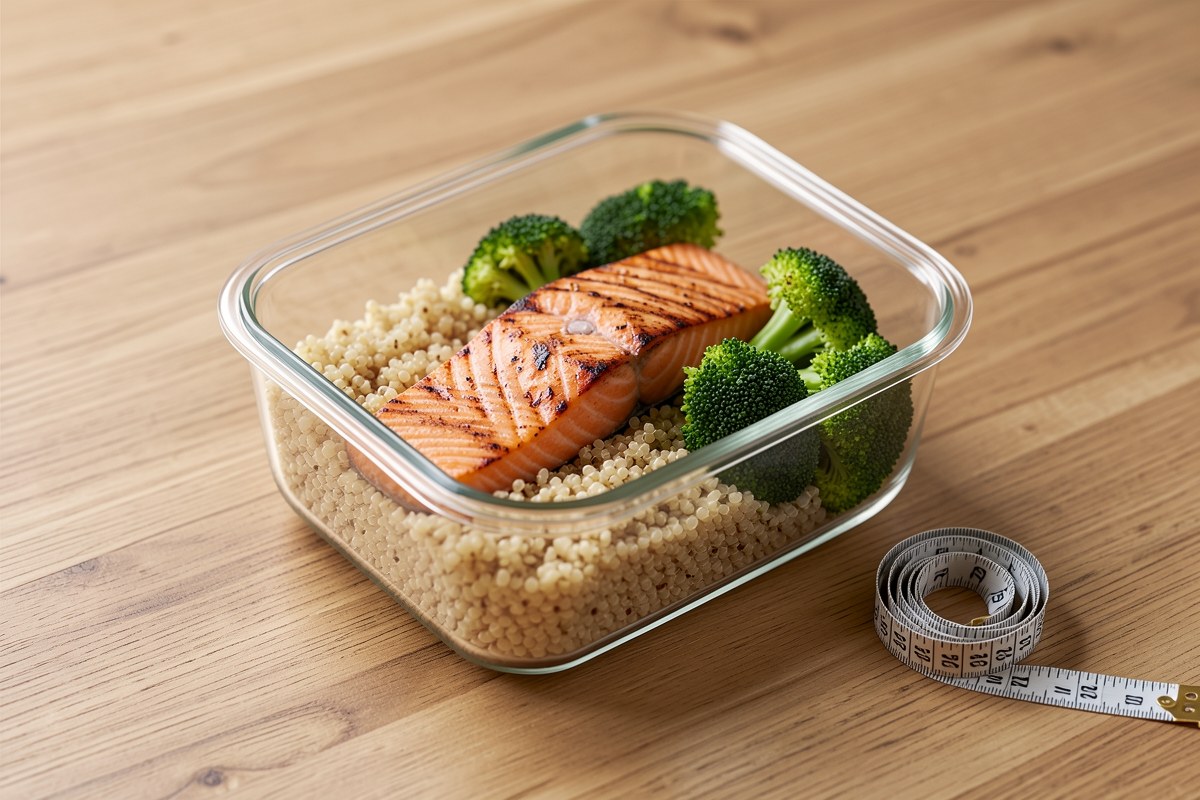
Dinner: Baked salmon (4 ounces) with 1 cup roasted broccoli and 1/2 cup quinoa. About 400-450 calories.
Snack: 1/4 cup hummus with 1 cup sliced carrots and bell peppers. About 150 calories.
Total daily calories: roughly 1350-1500. This is a moderate calorie range for weight loss for many adults, but individual needs vary. Adjust portions to meet your specific energy needs. Use the hunger-fullness scale and listen to your body.
- Adjust portions based on your hunger and activity level.
- Use this as a template, not a strict plan.
- Prep ingredients like roasted vegetables and cooked grains in advance for quick assembly.
Sources: The Healthy, Berry Street
Frequently asked questions
Can meal prep help me lose weight?
Meal prep can help with weight loss by supporting portion control and making healthier choices easier. One secondary source reports that pre-portioned meals may lead to about 8% greater weight loss compared to self-selected diets. When you prepare your meals in advance, you control ingredients and portions, which helps you consume fewer calories without feeling deprived. Consistency is key, and meal prep makes it easier to stick to your plan.
Sources: RumenHow many calories should I aim for in a prepped meal?
The right number of calories depends on your individual needs and goals. For weight loss, a common approach is to create a moderate calorie deficit, but the exact amount varies by age, sex, activity level, and metabolic rate. Instead of focusing solely on numbers, aim for balanced meals that include protein, fiber, and healthy fats. A typical prepped meal might be 400-600 calories, but you should adjust to meet your energy needs and appetite. Use visual cues like a deck of cards for protein and half a plate of vegetables to guide portions.
Sources: Berry StreetWhat foods keep you full longer in meal prep?
Foods that are high in protein, fiber, and water tend to keep you full longer. Protein is especially satiating; many experts suggest aiming for 25-30 grams per meal, but individual needs vary. Good options include chicken, fish, eggs, Greek yogurt, legumes, and tofu. Fiber-rich foods like vegetables, fruits, and whole grains also add volume and slow digestion, helping you feel satisfied. Soups and stews are also filling because of their high water content. Incorporate a variety of these into your prepped meals to stay full between meals.
Sources: The Healthy, RumenHow can I avoid overeating prepped meals?
To avoid overeating prepped meals, portion them into individual containers at the time of prep so you have built-in boundaries. Use a hunger-fullness scale and aim to stop at about 7 out of 10—comfortably satisfied. Eat slowly because it takes 15-20 minutes for your brain to register fullness. Using smaller plates can also help you feel satisfied with less food. If you find yourself still hungry after a meal, wait 20 minutes and then consider adding a small snack like fruit or vegetables.
Sources: Berry Street