Why prepping vegetables saves time
When you prep vegetables ahead of time, you remove the biggest obstacle between you and a healthy meal: the prep work itself. Having washed, cut, or roasted vegetables ready in the fridge makes it easier to add them to breakfasts, lunches, and dinners throughout the week. That convenience often translates into eating more vegetables without thinking about it.
Batch prepping vegetables can save you up to 30 minutes of prep time each day during the workweek, a helpful estimate from a meal prep guide. Even if your own time savings are smaller, having clean, cut, or cooked vegetables ready means you’re less likely to skip them when you’re hungry.
Beyond time, the habit of having vegetables on hand supports better nutrition. You can easily toss a handful of roasted broccoli into pasta, add sliced bell peppers to a wrap, or blend spinach into a smoothie—all without extra chopping.
- Saves time during busy weekdays
- Makes vegetables more accessible for quick meals
- Helps you consistently include produce in your diet
Sources: Love and Lemons, Nomadette
Washing and Drying Vegetables Safely
Before you cut anything, give your vegetables a proper wash. Start with whole, large vegetables such as root vegetables and cruciferous types. Fill a clean sink or large bowl with cold water and soak hardy vegetables for 5 to 10 minutes. For extra thoroughness, you can add a little salt to the water, then give them a final rinse. This method helps loosen dirt and any residues.
Delicate greens, like spinach and baby bok choy, need a gentler approach. Soaking them for too long can cause wilting, so simply rinse them under running water and then dry them well. For leafy greens, a salad spinner is your best friend. Spinning removes excess moisture, which is key for keeping them fresh longer in the fridge.
After washing, let all vegetables dry completely before storing or cutting. Moisture speeds up spoilage, so dry them on a clean towel or spin them dry. For sturdier vegetables, patting them with a kitchen towel works well.
- Soak hardy vegetables in cool water for 5–10 minutes
- Use saltwater for a deeper clean, then rinse
- Rinse delicate greens quickly and spin dry
- Dry all vegetables thoroughly before storage
Sources: Nomadette
Cutting Techniques and Uniform Sizes for Even Cooking
The golden rule of vegetable prep is to cut pieces into uniform sizes. When vegetables are similar in thickness and shape, they cook at the same rate. If you mix large chunks with small dice, the smaller pieces will be done while the larger ones are still crunchy, or the large pieces will be overcooked by the time the small ones are tender.
Think about how you’ll use the vegetable. For roasting, aim for bite-sized pieces about 1 to 2 inches across. For stir-fries, thin slices or matchsticks work well. For soups or stews, a consistent dice helps everything cook evenly.
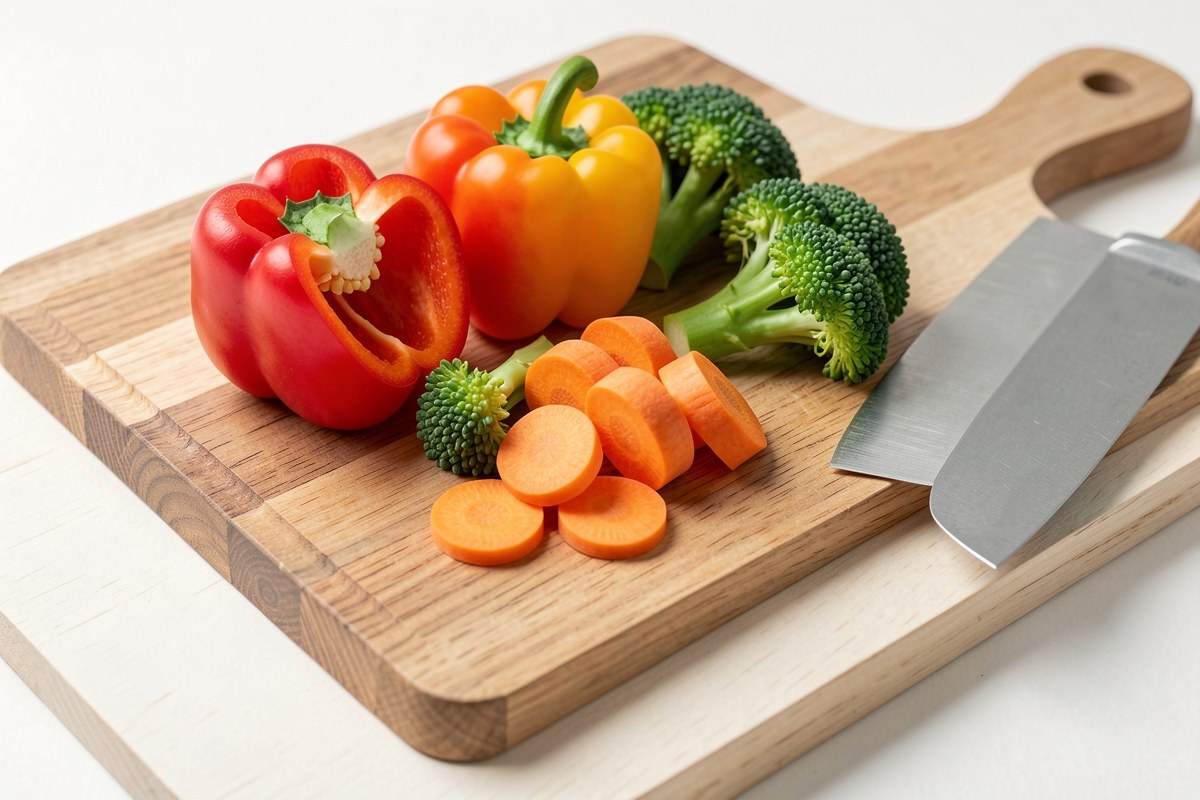
A sharp knife and a stable cutting board make the job easier and safer. If you’re cutting many vegetables at once, organize them by type and cut them in batches. You don’t need to use a different board for each vegetable, but do keep raw produce separate from raw meat or poultry.
- Cut pieces to roughly the same size for even cooking
- Match cut type to the cooking method
- Use a sharp knife and stable board
- Work in batches for efficiency
Sources: Love and Lemons, Nomadette
Best Vegetables for Roasting and Their Cook Times
Roasting is one of the easiest and most flavorful ways to meal prep vegetables because it brings out their natural sweetness and gives them a satisfying texture. Pre-roasted vegetables also reheat well, making them ideal for eating all week. Popular choices include sweet potatoes, broccoli, cauliflower, butternut squash, asparagus, and Brussels sprouts.
Here’s a quick reference for some common roasting times at 425°F, but remember to treat these as starting points and check for doneness:
- Root vegetables (like sweet potatoes and onions): about 30 minutes
| Vegetable Type | Approximate Time |
|---|---|
| Sweet potatoes | about 30 minutes |
| Onions | about 30 minutes |
| Broccoli | about 20 minutes |
Sources: Love and Lemons
Steaming and Sautéing Vegetables for Meal Prep
Roasting isn’t the only way to enjoy prepped vegetables. Steaming and sautéing are quick, healthy methods that work well for weeknight meals. Steaming preserves color and nutrients, and it’s especially good for broccoli, green beans, and carrots. You can steam a large batch in a few minutes, then cool it and store it for later.
Sautéing gives vegetables a slightly caramelized flavor and a tender-crisp texture. Cut your vegetables into uniform slices or small pieces, heat a little oil in a skillet, and cook until they reach the desired doneness. For meal prep, you can sauté a mix like bell peppers and onions, then use it throughout the week in frittatas, sandwiches, or grain bowls.
Both steaming and sautéing are flexible: you can season simply with salt, pepper, and herbs, or add a splash of soy sauce or balsamic vinegar for extra flavor. Just be mindful not to overcook, as vegetables will continue to soften when you reheat them later.
- Steaming works well for broccoli, green beans, and carrots
- Sautéing is ideal for bell peppers and onions
- Both methods allow for simple seasoning
- Cool vegetables completely before refrigerating
Sources: Love and Lemons
Storage and Reheating Guidelines for Each Preparation Style
Proper storage keeps your prepped vegetables fresh and safe. After roasting, steaming, or sautéing, let the vegetables cool to room temperature before transferring them to airtight containers. For cooked vegetables, follow standard food safety guidance and refrigerate them promptly. As a general rule, cooked vegetables are best used within a few days.
If you’ve cut raw vegetables for salads or snacking, store them in a container with a paper towel to absorb excess moisture. This helps maintain crispness. For leafy greens, a salad spinner removes moisture, and then store them in a container lined with a paper towel, leaving the lid slightly open for airflow.
For reheating, the goal is to warm vegetables through without overcooking them. Roasted vegetables reheat well in an oven or toaster oven, while steamed and sautéed vegetables can be reheated in the microwave or on the stovetop. Heat them just until hot and steaming.
- Cool cooked vegetables completely before refrigerating
- Store in airtight containers
- Use a paper towel in containers for raw cut vegetables
- Reheat gently to avoid overcooking
Sources: Love and Lemons, Nomadette
Frequently asked questions
How do you keep cut vegetables crisp in the fridge?
The main enemy of crispness is moisture, so it’s essential to dry vegetables thoroughly after washing. For leafy greens, use a salad spinner to remove excess water. For other cut vegetables, store them in airtight containers lined with a paper towel to absorb extra moisture. Keeping the container sealed but slightly open for greens helps maintain texture for several days.
Sources: NomadetteCan you freeze raw vegetables?
Yes, you can freeze raw vegetables, but the quality varies. Freezing raw vegetables without any treatment can lead to changes in texture, often becoming mushy when thawed. For best results, many vegetables benefit from a quick blanch in boiling water before freezing, but you can also freeze them raw if you plan to use them in cooked dishes. Always use freezer-safe bags or containers and label them with the date.
Sources: Love and LemonsWhich vegetables do not reheat well?
Some delicate, high-water vegetables like leafy greens or cucumbers may not reheat well because they can turn mushy or develop an off flavor. These are best eaten fresh or added after reheating. Hardier vegetables like roasted roots and cruciferous vegetables reheat well, but they can become slightly softer on the second go. For the best texture, reheat gently and briefly.
Sources: Love and LemonsSources
- 60 Healthy Meal Prep Ideas — Love and Lemons
- Ultimate Guide to Vegetable Meal Prep: Save Time and Eat Healthier - Nomadette — Nomadette